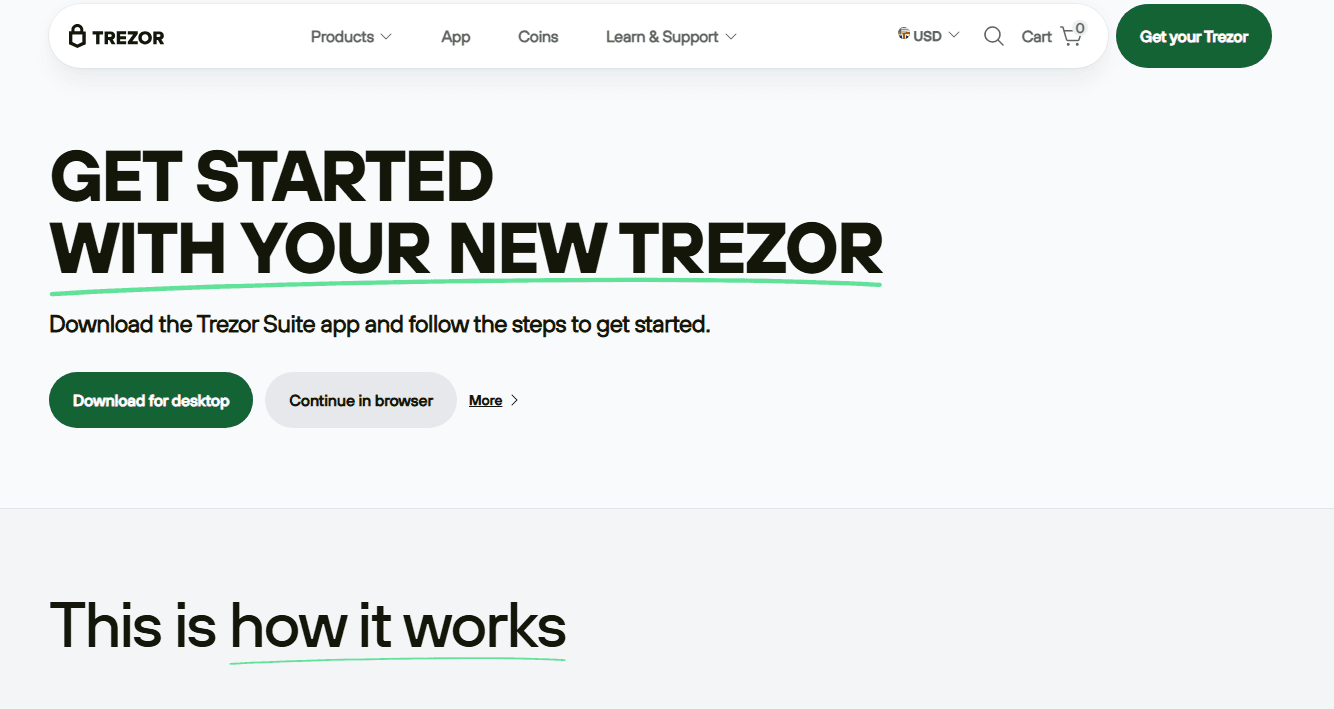
Trezor Login: Complete Guide to Secure Access and Crypto Management
Trezor Login is the secure authentication process for accessing a Trezor hardware wallet, one of the most trusted tools for managing cryptocurrency safely. Unlike traditional logins that rely on usernames and passwords, Trezor Login uses hardware-level verification, cryptographic security, and device confirmation. This combination significantly reduces the risks of phishing attacks, unauthorized access, and malware threats.
Understanding how Trezor Login works is essential for both beginners and experienced users. Proper use ensures that digital assets remain secure while allowing efficient wallet management.
What Is Trezor Login?
Trezor Login is the method by which users securely connect their Trezor device to management software, such as Trezor Suite, and confirm access using the hardware wallet itself. Unlike typical online logins, this process ensures that private keys never leave the device. All sensitive operations, including accessing accounts or confirming transactions, require user verification directly on the hardware.
This system combines software interface convenience with hardware security, providing one of the safest ways to access cryptocurrency holdings.
How Trezor Login Works
The login process begins when a user connects their Trezor device to a computer or compatible mobile device. The wallet communicates securely with the management interface, while private keys remain isolated inside the hardware wallet.
Users must enter their PIN directly on the device and confirm any transactions or sensitive actions physically. This ensures that even if the connected device or network is compromised, assets remain secure.
Why Trezor Login Is More Secure Than Passwords
Traditional login methods rely on passwords, which can be stolen via phishing, malware, or data breaches. Trezor Login eliminates this risk by requiring physical access to the hardware wallet.
Authentication depends on cryptographic verification and user confirmation on the device itself. Even if a computer is compromised, unauthorized access to funds is prevented, providing robust security for crypto users.
PIN Protection in Trezor Login
A personal identification number (PIN) is a critical component of Trezor Login security. Every time a user accesses their wallet, the correct PIN must be entered on the device. Multiple incorrect entries trigger exponential time delays, deterring brute-force attacks.
Users are advised to select a strong PIN that is not easily guessable and to never share it. The PIN acts as the first line of defense, especially if the hardware wallet is lost or stolen.
The Role of the Recovery Phrase
While the recovery phrase is not used during daily logins, it is a crucial part of wallet security. This phrase allows users to restore access if the device is lost, stolen, or damaged.
The recovery phrase is generated during initial setup and consists of 12, 18, or 24 words. Keeping it offline and secure ensures that no one else can replicate the wallet and access the funds.
Device Confirmation and Transaction Verification
Trezor Login requires all critical actions to be confirmed directly on the hardware wallet. Users must verify transaction details, such as recipient addresses and amounts, on the device screen before approving.
This ensures that even if the connected software interface is compromised, transactions cannot be executed without physical confirmation, significantly reducing the risk of fraud.
Trezor Login for Beginners
For newcomers to cryptocurrency, Trezor Login simplifies security management. Instead of memorizing complex passwords, users rely on a physical device and a simple PIN.
This reduces the risk of common mistakes and helps beginners understand key concepts, such as private key ownership, offline storage, and self-custody principles.
Trezor Login for Experienced Users
Experienced crypto holders benefit from Trezor Login due to its reliability and consistency. The workflow is the same regardless of portfolio size or the number of assets, making it easier to manage multiple accounts securely.
Advanced users can leverage hardware-based verification to maintain security while efficiently handling large and complex portfolios.
Using Trezor Login Across Multiple Devices
Trezor Login is device-independent. Users can access their wallet from any compatible computer or mobile device, provided they have the hardware wallet and know the PIN.
Because private keys never leave the device, switching between devices does not compromise security. This flexibility is especially valuable for professionals or those who work with multiple systems.
Common Issues During Trezor Login
While Trezor Login is straightforward, some users may face occasional issues:
Entering an incorrect PIN multiple times
Outdated Trezor Suite or device firmware
Connection or driver problems
These issues are usually resolved by verifying device connection, updating software, and carefully entering the correct PIN. Patience and accuracy are critical for secure login.
Best Practices for Trezor Login Security
To ensure maximum protection, users should follow these best practices:
Keep the PIN confidential and avoid simple sequences
Store the recovery phrase securely offline
Always verify transactions on the device screen
Avoid using untrusted or public computers
Keep the hardware wallet in a safe, private location
Following these habits reduces the risk of security breaches and ensures long-term protection of assets.
Avoiding Phishing and Impersonation
Trezor Login naturally protects against phishing attacks because no operation can be completed without the hardware device. Even if users encounter a fake interface, the lack of physical confirmation prevents unauthorized access.
This makes Trezor Login an effective safeguard against social engineering and other common crypto scams.
Trezor Login and Long-Term Asset Management
The reliability and consistency of Trezor Login make it suitable for long-term crypto management. Users can safely access and manage assets as portfolios grow, without having to change login methods or compromise security.
Strong login practices established early can prevent losses and simplify asset management over the years.
Privacy Advantages of Trezor Login
Trezor Login enhances privacy because it does not require email addresses, usernames, or centralized authentication systems. Users retain full control over their login process and authentication data, aligning with the principles of self-custody in cryptocurrency.
Supporting Self-Custody Principles
Trezor Login reinforces self-custody, allowing users to maintain full control over their private keys. There is no reliance on third parties to reset passwords or access funds, emphasizing personal responsibility in cryptocurrency ownership.
The Role of Trezor Login in the Crypto Ecosystem
Hardware-based login systems like Trezor Login strengthen the broader cryptocurrency ecosystem. By reducing account compromise risks, they build trust in self-custody solutions and contribute to a safer digital asset environment.
Conclusion
Trezor Login is a secure, hardware-based authentication system that allows users to access and manage their cryptocurrency safely. By combining PIN verification, recovery phrase security, device confirmation, and offline key storage, it provides a robust alternative to traditional login methods.
Whether you are a beginner or an experienced investor, understanding Trezor Login and following best practices is essential for maintaining control and security over digital assets. Proper use ensures long-term protection, peace of mind, and confidence in self-custody.